If you’re in the mining, quarrying, or construction industry, you know that the quality of your drilling tools directly impacts productivity and cost-efficiency. Among the various threading systems available, the T38 drill rod stands out as one of the most popular and versatile choices for top-hammer drilling applications.
This comprehensive guide explores everything you need to know about T38 drill rods, from their specifications and advantages to how to choose the right one for your specific operation.
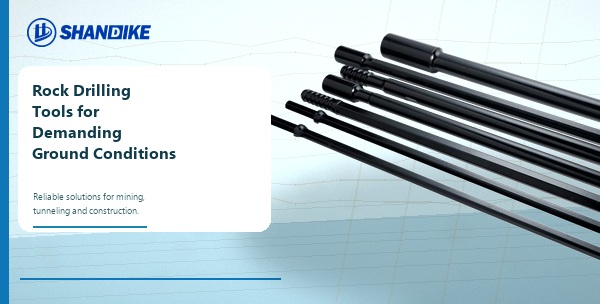
The T38 drill rod is a type of threaded extension drill rod widely used in surface bench drilling and underground mining operations It is part of the “T-class” thread system, which is an industry-standard classification that simplifies the selection of compatible drilling components.
The “T38” designation refers to the thread design and size specification. It features a 38mm nominal thread diameter and a thread pitch optimized for efficient drilling performance and easy coupling/uncoupling.
These drill rods are manufactured from high-strength alloy steel, often using materials like 23CrNi3Mo, and undergo full carburization heat treatment to achieve a wear-resistant outer layer while maintaining a tough, impact-resistant core.
Understanding the technical specifications of T38 drill rods is essential for selecting the right tool for your application.
The T38 thread is characterized by a specific pitch and thread form that enables:
Fast and secure connections with compatible shank adapters, couplings, and bits
Efficient energy transfer from the rock drill to the drill bit
Reduced thread wear and easier uncoupling, even after heavy use
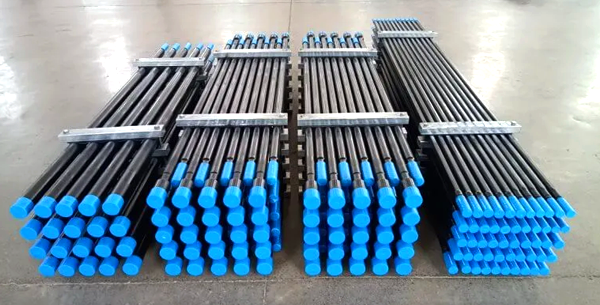
T38 extension rods are available in two main cross-section profiles :
| Cross-Section Type | Diameter | Common Lengths |
|---|---|---|
| Hexagonal (Hex) | 32mm | 3050mm, 3660mm, 4000mm+ |
| Round | 39mm | 3050mm, 3660mm, 4270mm+ |
Hexagonal rods are generally more rigid and heavier, transferring energy more efficiently while providing better flushing capability. Round rods are lighter and typically used in longer extension drilling applications.
T38 drill rods are available in a wide range of lengths to suit different drilling depths and equipment configurations. Standard lengths include:
915mm (3 feet)
1220mm (4 feet)
1525mm (5 feet)
1830mm (6 feet)
2435mm (8 feet)
3050mm (10 feet)
3660mm (12 feet)
4270mm (14 feet)
4880mm (16 feet)
5525mm (18+ feet)
6095mm (20 feet)
T38 drill rods are designed to create blast holes in the range of 64mm to 127mm, making them suitable for bench drilling, production drilling, and construction applications .
There are several configurations of T38 drill rods, each designed for specific operational requirements.
This is the most common type of T38 drill rod. It features the same male thread on both ends and requires a coupling sleeve to connect to other extension rods or to a shank adapter and bit. The flushing hole runs through the center of the rod to transmit air or water during drilling.
Applications: Most bench and production drilling operations.
Male/Female rods have a male thread on one end and a female thread on the other, eliminating the need for separate coupling sleeves. This design offers several advantages :
More rigid connections: Greater thread stability results in straighter holes
Easier handling: Faster coupling and uncoupling, reducing downtime
Better energy transfer: Higher penetration rates, often 10% or more compared to rod-and-coupling sleeve combinations
Longer service life: The integrated design reduces wear points
Applications: Operations prioritizing speed, accuracy, and reduced stock requirements.
Guide rods are used to provide stabilization when drilling long holes. T38 guide rods typically have a round profile with a 39mm diameter and standard lengths around 3660mm.
The performance and lifespan of a T38 drill rod depend heavily on the quality of materials and manufacturing processes.
T38 drill rods are manufactured using chromium-molybdenum alloy steels (such as 23CrNi3Mo), which provide excellent resistance to fatigue, wear, and impact. Some premium brands use steel alloys sourced from leading suppliers like Swedish steel or China Baosteel .
Advanced T38 drill rods undergo a full carburization process that increases the carbon content in the outer layer, creating a hardened surface that resists wear and abrasion while maintaining a tough, ductile core that withstands high impact forces . This process significantly extends tool life, with service life improvements of 30% or more reported in some premium ranges.
Precision-engineered threads are critical for ensuring secure connections and minimizing energy loss. Reputable manufacturers use CNC machines to form threads and heat treatment to guarantee consistent quality and tight tolerances . Modern manufacturing employs CNC precision machining to ensure dimensional accuracy .
Why choose T38 over other thread systems? Here are the key benefits:
The T38 thread design ensures efficient energy transfer from the drill hammer to the bit, maximizing penetration rates and allowing you to drill more meters per shift . In good rock conditions, T38 rods can produce straighter holes and higher penetration rates compared to other thread systems.
Rods made from high-grade alloy steel with full carburization treatment resist wear, corrosion, and fatigue far better than standard drill rods. This results in fewer rod changes, reduced downtime, and lower cost per drilled meter.
The optimized T38 thread pitch allows for easier coupling and uncoupling, reducing the physical strain on operators and minimizing the risk of rod damage during connection/disconnection. Fewer rod changes also reduce handling and transport requirements, improving on-site safety.
T38 drill rods are compatible with a wide range of top-hammer rock drills, including Epiroc COP series drills (COP SC16, SC19, SC25, and COP 1838+ for underground applications) and many other major brands . They are suitable for various rock formations, from soft to medium-hard to hard rock.
While high-quality T38 rods may have a higher initial cost, their extended service life and improved drilling efficiency translate to significantly lower total operating costs over time .
Selecting the correct T38 drill rod for your operation involves considering several factors:
Hard rock formations: Choose rods with full carburization and high alloy content for maximum wear resistance and impact strength .
Medium to soft formations: Standard T38 rods will typically perform well, offering a good balance of performance and cost.
Surface bench drilling: T38 extension rods, whether hexagonal or round, are ideal for this application.
Underground mining and tunneling: MF (speed) rods offer significant advantages in terms of handling and hole straightness in confined spaces .
Shallow holes: Standard length rods (1.5m, 3m, etc.) are suitable.
Deep hole drilling: Longer extension rods (up to 6m or more) reduce the number of connections needed, improving efficiency and hole accuracy .
Hexagonal (32mm): Provides greater rigidity and better energy transfer; ideal for demanding conditions where hole straightness is critical .
Round (39mm): Lighter weight; suitable for most bench and long-hole drilling applications .
MF/Speed Rods: Choose these if you prioritize quick rod changes, straighter holes, and reduced stock requirements.
Standard Extension Rods with Couplings: A cost-effective choice if you already have a stock of coupling sleeves and need maximum flexibility.
To maximize the lifespan of your T38 drill rods, follow these maintenance best practices:
Check threads and surfaces for signs of wear, cracks, or corrosion before and after each use. Under normal conditions, T38 drill rods can last from 6 months to 2 years, but regular inspection is critical to identify wear and potential failure points early .
Inspect flushing holes to ensure they are clear of debris.
Use proper tools and techniques for coupling and uncoupling to avoid thread damage.
Store rods in a dry, clean area to prevent corrosion. The corrosion-resistant coating on many rods helps, but proper storage is still essential .
Consider re-grinding or replacing worn threads to extend rod life before complete failure occurs.
Pay attention to thread wear indicators provided by manufacturers.
Use appropriate thread lubricants (often supplied with new rods) to reduce wear and facilitate easier coupling/uncoupling. Premium-grade T38 rods feature optimized thread pitch for less wear and easier uncoupling
It’s important to note that T38 drill rods are not interchangeable with other T-class systems, such as T45, T51, or T60. Each thread type has different diameters, pitch designs, and coupling specifications. Always ensure that your drill rod, shank adapter, coupling, and drill bit are all from a compatible T38 system.
The T38 drill rod is a high-performance, versatile tool that has become a standard in top-hammer rock drilling across the globe. Whether you choose standard male-male extension rods for your bench drilling operation or invest in MF speed rods for underground mining, selecting a high-quality product manufactured from premium materials with full carburization treatment is essential for maximizing productivity, minimizing downtime, and reducing your overall drilling costs.
By understanding the specifications, benefits, and maintenance requirements of T38 drill rods, you can make informed purchasing decisions that will keep your operation running efficiently and profitably for years to come.
Need more information about our T38 drill rod products? Contact our expert team today for personalized recommendations.